Measure
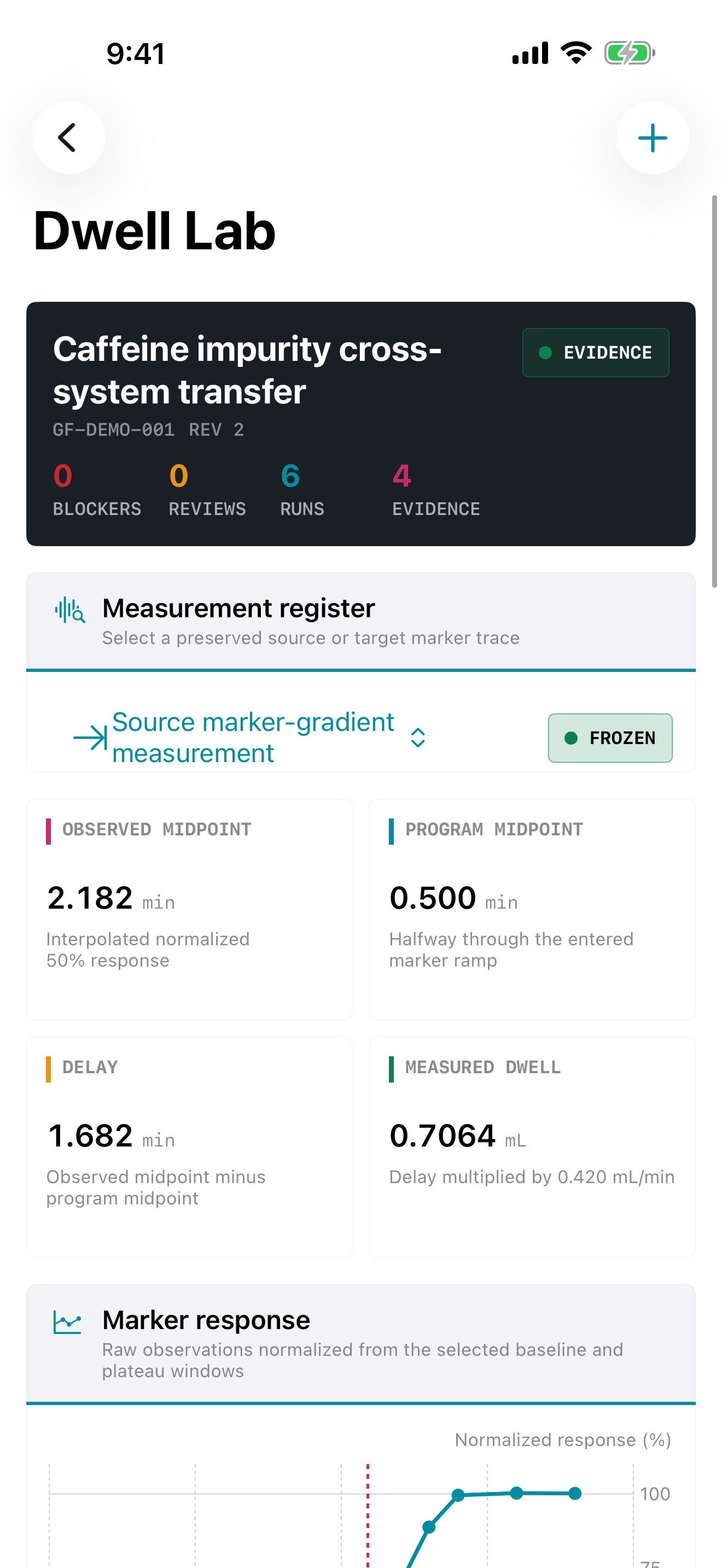
Record marker-gradient response points and preserve calculated midpoint, delay, and dwell volume as independently frozen evidence.
Offline LC transfer evidence casebook
Carry a transfer from raw dwell observations through frozen method revisions, translated design, replicate evidence, bounded scenarios, and controlled handoff.
From source method to reviewable record
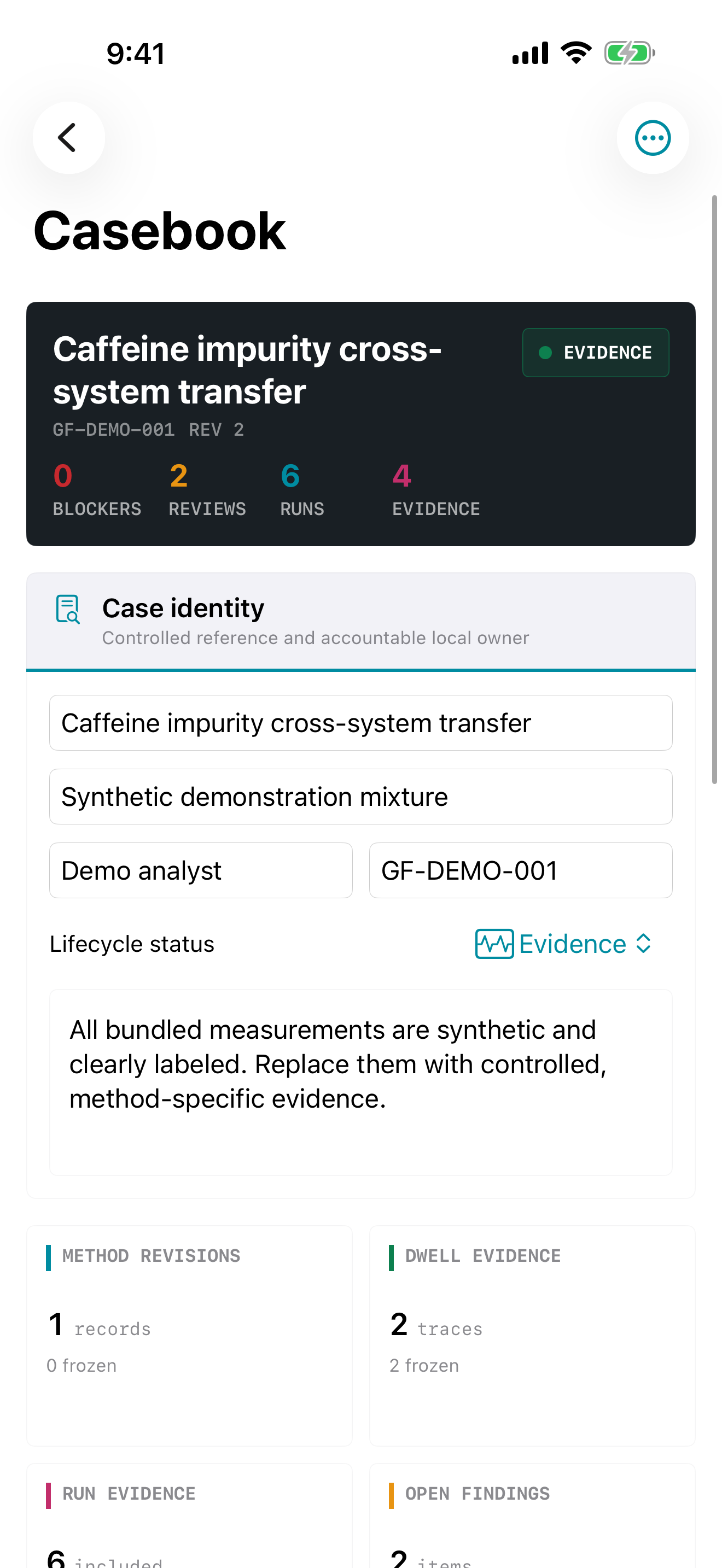
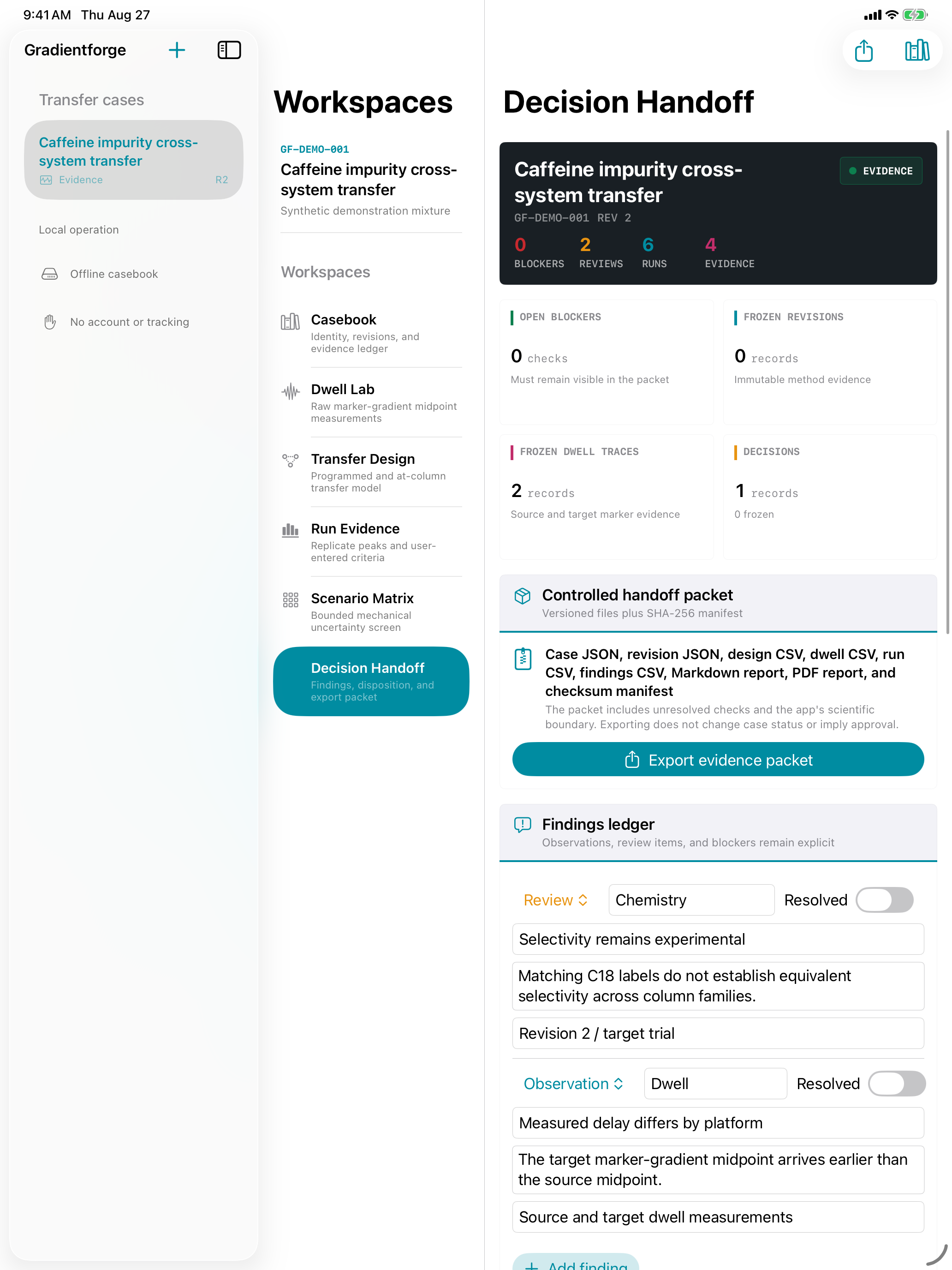
Gradientforge treats method transfer as a controlled evidence workflow. Source and receiving systems, raw dwell observations, frozen method revisions, gradient design, replicate results, uncertainty bounds, findings, and operator decisions remain attached to one local case.
Record marker-gradient response points and preserve calculated midpoint, delay, and dwell volume as independently frozen evidence.
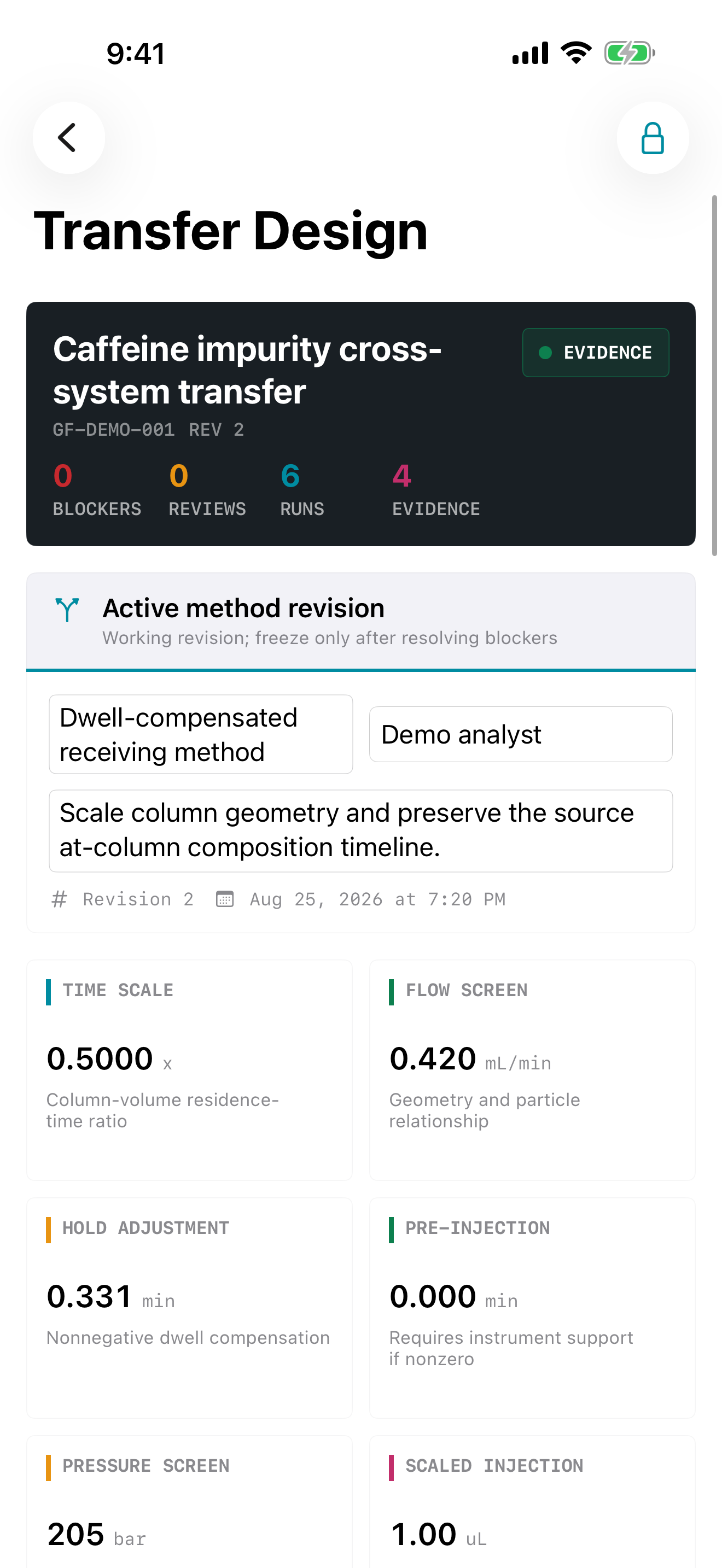
Compare programmed and at-column timelines while screening flow, dwell compensation, relative pressure, injection, equilibration, and solvent demand.
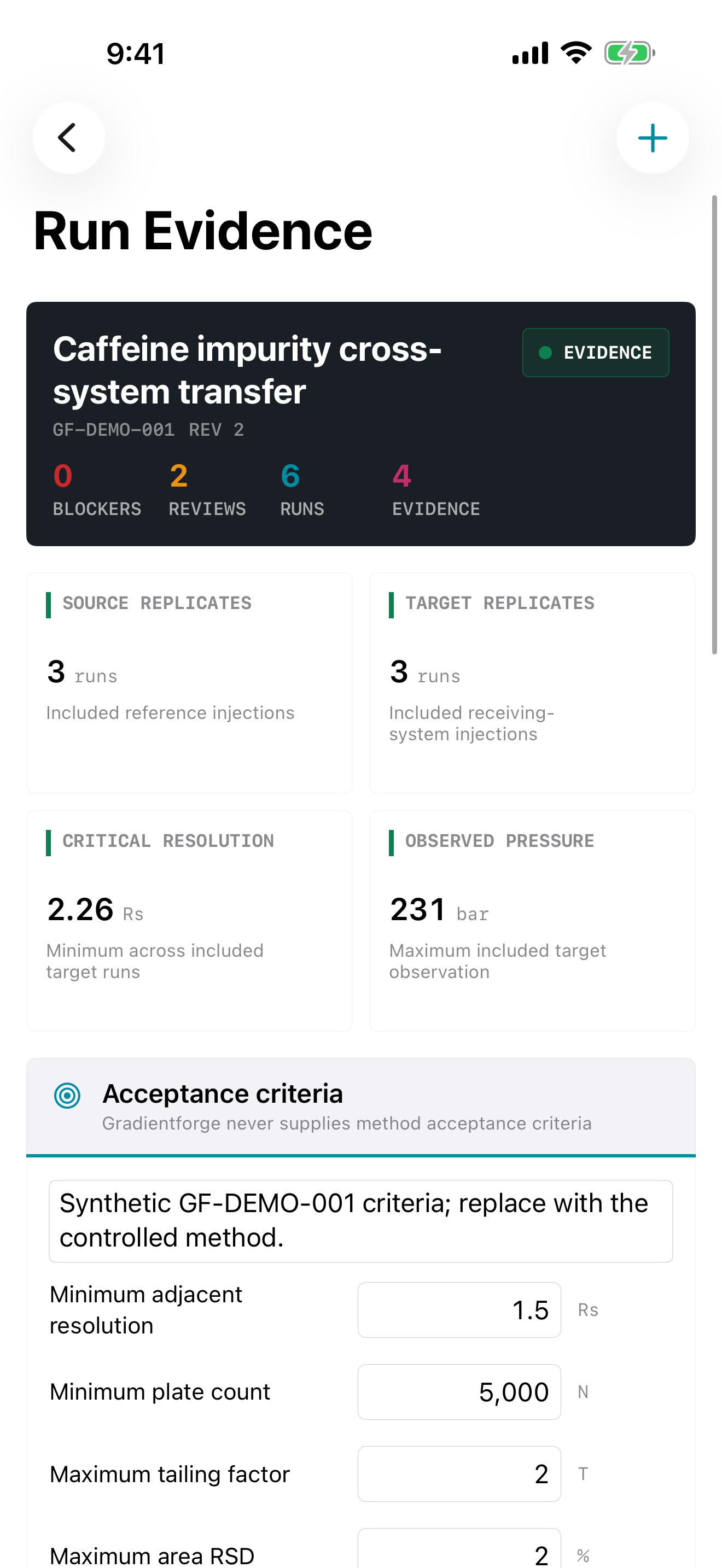
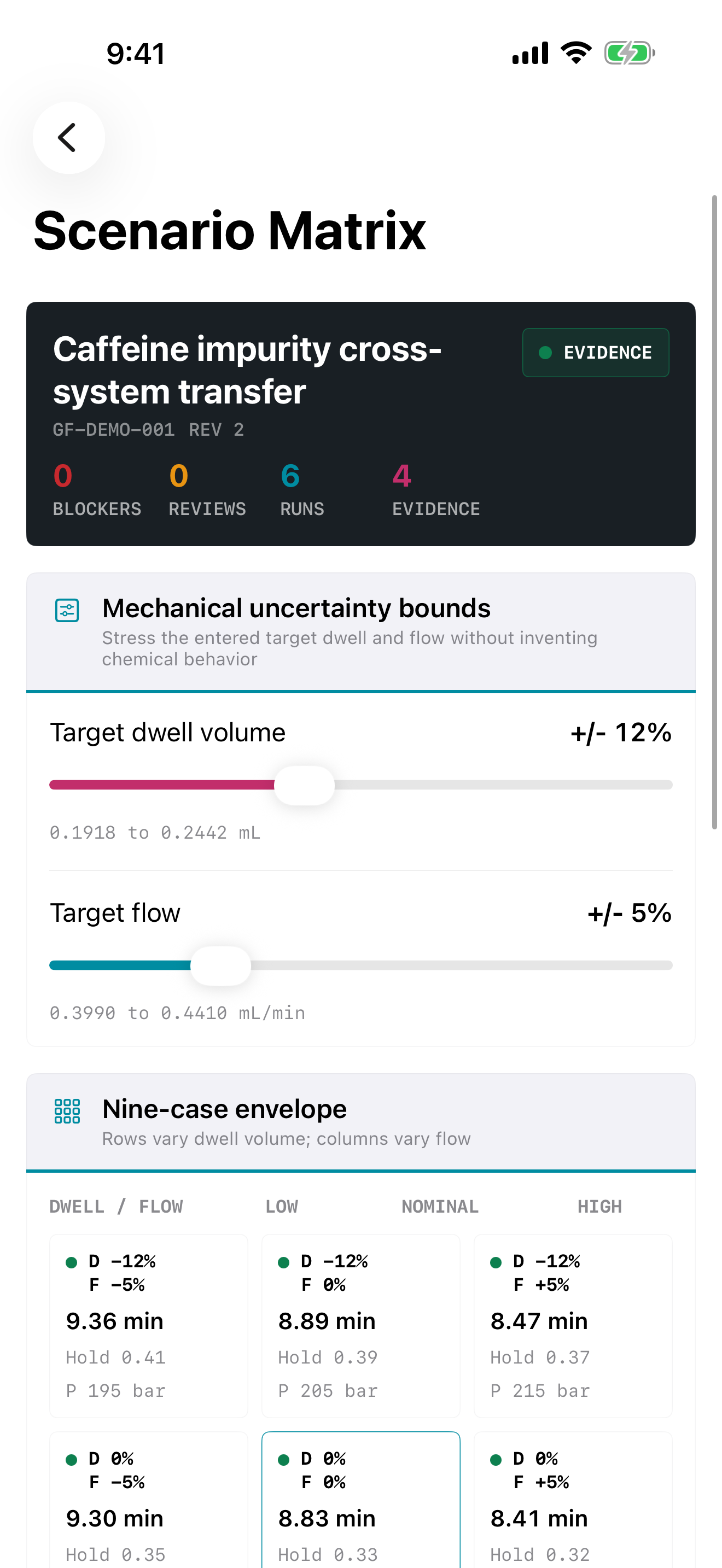
Keep replicate peaks and controlled-method criteria, then inspect a bounded nine-case dwell and flow uncertainty matrix.
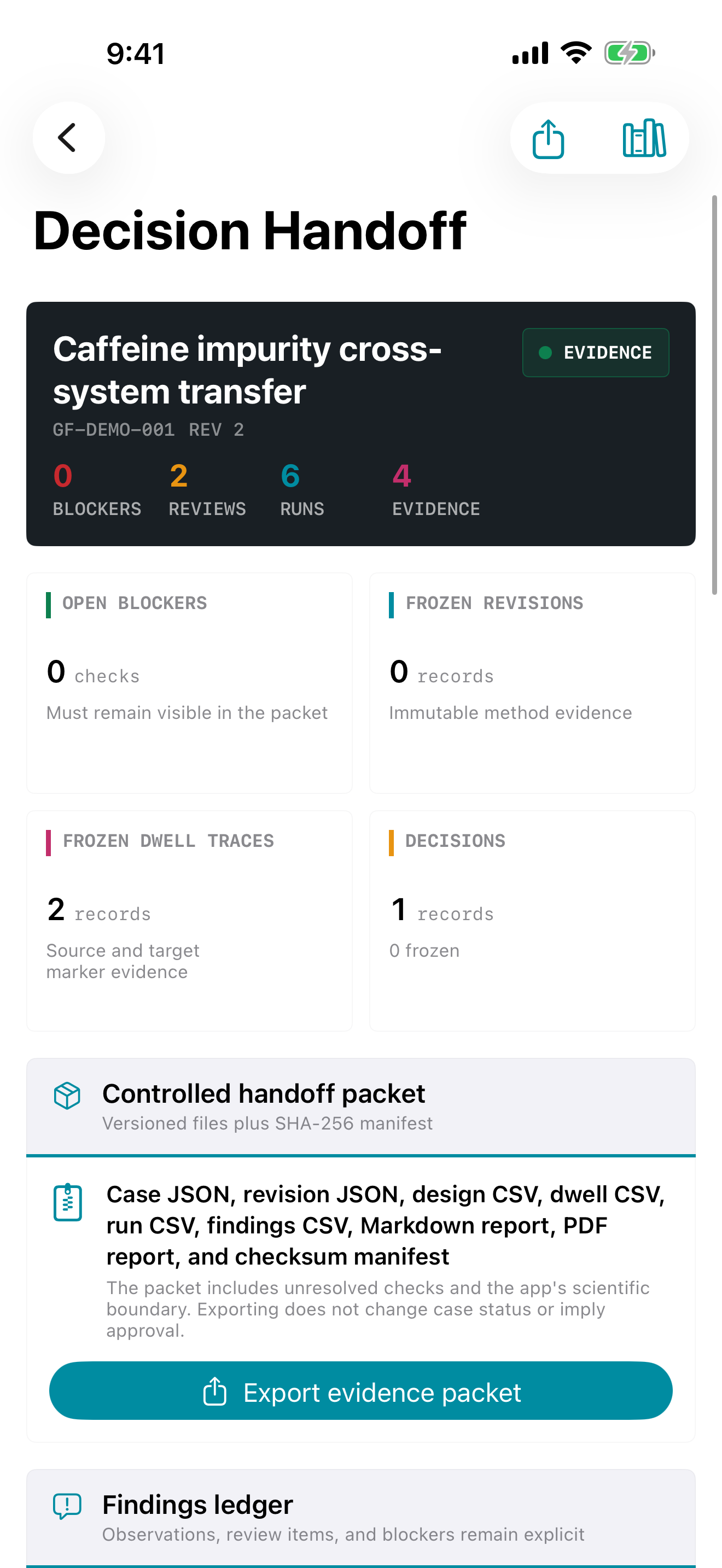
Resolve findings, record owners and disposition, and export readable and machine-readable evidence with a SHA-256 manifest.
Current version 1.1 build 6 interface
Portable evidence
A translated table alone does not show how it was produced. Gradientforge packages the case, active revision, calculations, raw dwell evidence, replicate runs, findings, decisions, and audit state alongside readable reports.
Experimental verification required
Gradientforge uses user-entered values and simplified scaling relationships. Its scenario matrix varies mechanical inputs only. It does not control an LC system, import proprietary instrument methods, predict chemical selectivity, prescribe acceptance criteria, qualify equipment, release a batch, validate or verify a method, or certify regulatory compliance.
Confirm chemistry, column limits, pressure, dwell behavior, system suitability, and method performance experimentally under the laboratory's controlled quality system.
Technical basis